How To Become a Content Writer? This is a common question that young graduates ask. I am a content specialist who can definitely help you with that. In this guide, I will explain to you who a content writer is, their types, their skills & qualifications, step by step to get into this profession and most importantly its future in the coming years. Let’s begin!
A content writer is a professional person who researches, writes, edits and publishes engaging, high quality digital or print content to inform audiences and promote brands. They create blog posts, articles, social media captions, books, papers, website copy and more. Here are some of their common responsibilities:
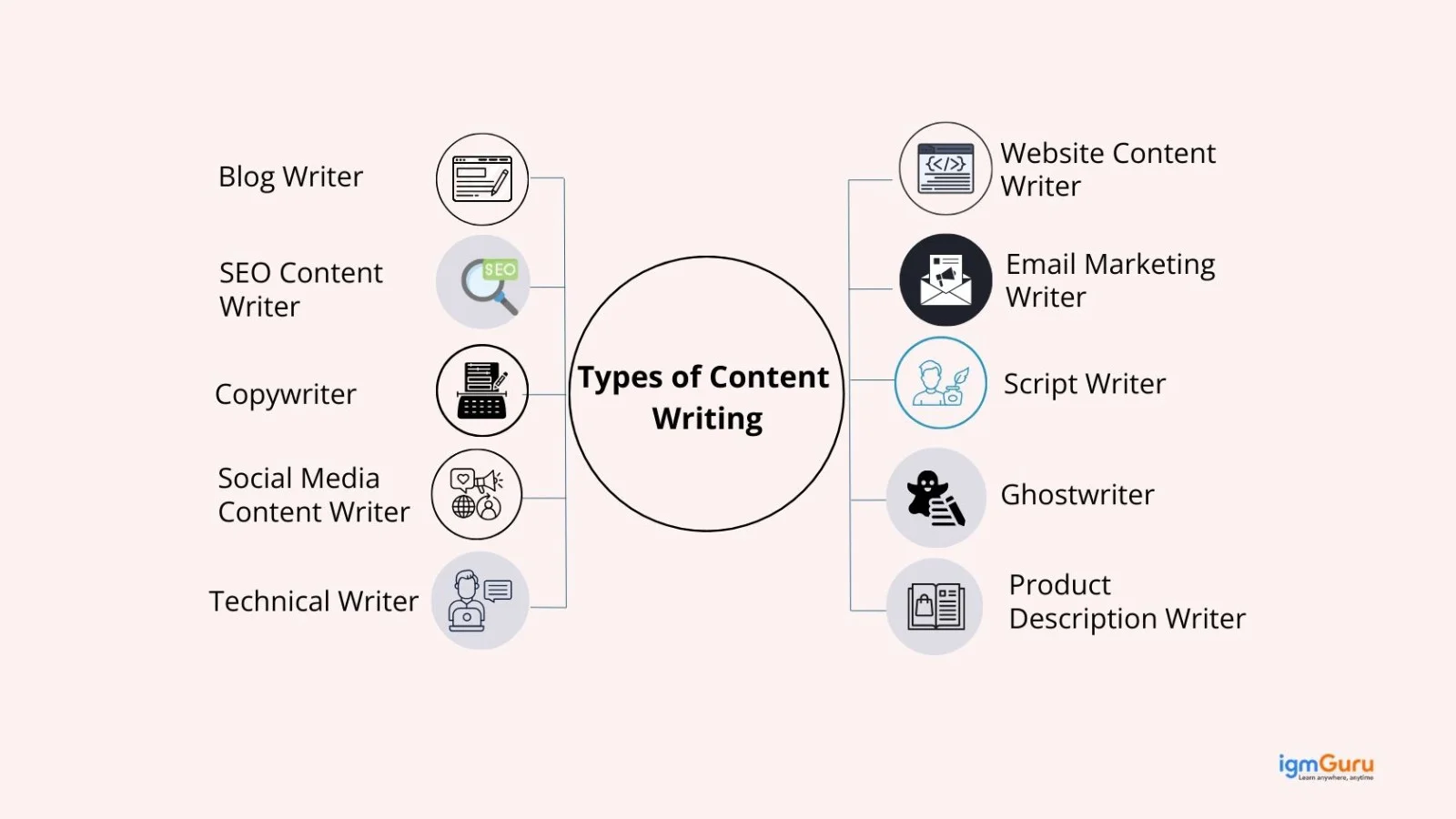
If you think that this is just one job then you are wrong. There are different types of content writers and each one has a special role. Here are its 10 types:
A blog writer writes articles for websites. They share useful information, tips or ideas on different topics like health, business, travel and news. Their goal is to help readers understand something easily. They write in a friendly way so people enjoy reading and spend more time on the website.
An SEO content specialist writes those type of content that rank on Google. They use keywords so people can find the article easily when they search online. Their goal is to bring more visitors to a website. They focus on clear writing and useful information that answers people’s questions.
A copywriter creates ads, sales pages and promotional messages. Their main goal is to convince people to take action, like buying a product or signing up. They use simple but powerful words that attract attention and make readers feel interested.
A social media content writer creates posts and captions for platforms like Instagram and Facebook. They write short and catchy content that grabs attention quickly. Their goal is to increase likes, comments and followers. They understand trends and write in a fun and relatable way.
A technical writer explains difficult topics in simple words. They write user guides, manuals and instructions. Their job is to help people understand how to use a product or system. They focus on clear steps so readers can follow easily without getting confused.
A website content writer writes content for web pages like Home, About and Services. They explain what the business does and how it helps customers. Their goal is to build trust and make visitors feel confident.
An email marketing writer writes emails to customers. These emails can promote products, share news or give special offers. They write short and interesting messages with strong subject lines.
A script writer writes scripts for videos, reels, and ads. They create dialogues and storytelling content that sounds natural when spoken. They keep viewers interested from beginning to end.
A ghostwriter writes for someone else. The other person gets the credit, not the writer. They may write books, blogs, or speeches. Their work is to match the person’s style and voice.
A product description writer writes about products sold online. They explain what the product does and why it is useful. Their goal is to help customers understand the product clearly and feel ready to buy it.
Read Also: Digital Marketing Interview Questions and Answers
When I was learning what this profession really does, I realised I didn’t need to be perfect. I just needed the right skills, practice and a basic understanding of writing. Content writing is more about clarity and consistency than being extraordinary. Let me break it down for you to understand it better:
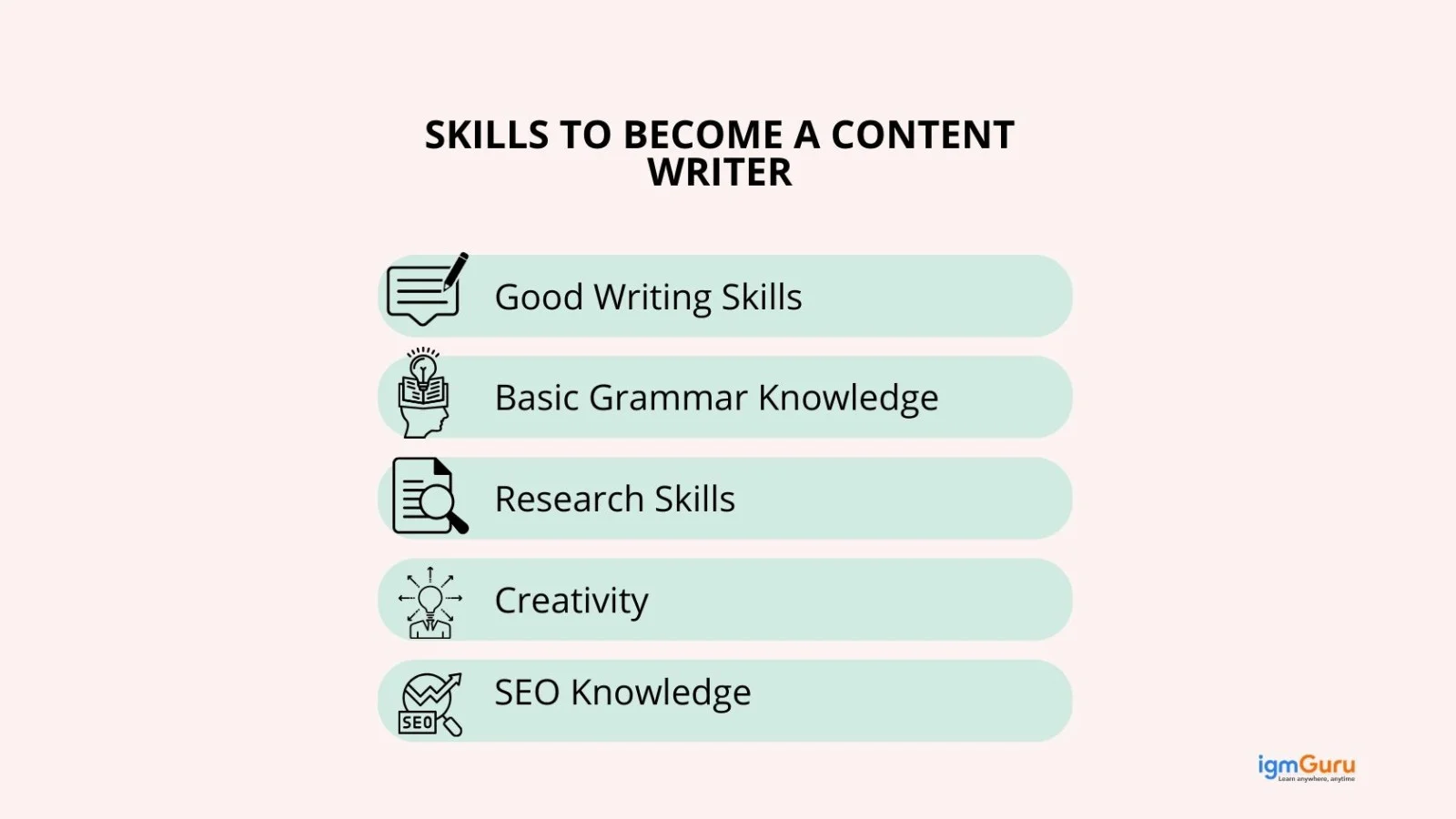
Clear writing helps people grasp your thoughts fast. When words are straightforward, messages land better. Thoughts flow well when clutter stays out. Smooth sentences guide readers naturally forward.
A solid grammar means few mistakes. Spelling things right keeps readers focused on what you say. Punctuation done well makes sentences flow smoothly and clear writing builds trust without trying too hard.
Research skills help writers find correct and useful information. A writer should check facts, read different sources and understand the topic well before writing any content.
Creativity helps writers make content interesting and engaging. A creative writer can present simple topics in new ways that attract attention and keep readers interested longer.
Starting with basic SEO means fitting keywords where they belong. When done right, stuff shows up on Google, making it easier for folks to stumble across and check out without hassle.
While anyone with strong writing skills can pursue a career in content writing, certain educational backgrounds and formal training can provide a strong foundation and open up more opportunities.
A bachelor’s degree is not mandatory, but it can be helpful—especially if you’re aiming for specialized roles or want to work with established organizations. Commonly preferred degrees include:
Employers may favor candidates with a relevant degree, as it demonstrates foundational writing, research, and critical thinking skills. However, your ability to write clearly and adapt to different styles is ultimately more important than your field of study.
Certification courses in content writing, SEO, or digital marketing can boost your credibility and help you learn industry best practices. Look for courses that offer practical assignments and are recognized by industry bodies or reputable institutions. These programs often cover:
Internships and workshops can also provide valuable hands-on experience.
If you wish to specialize in a particular niche (such as technical, medical, or legal writing), having a background or degree in that field is often essential. For example:
This expertise helps you create accurate and authoritative content.
In content writing, a strong portfolio is often more valuable than formal qualifications. Employers and clients want to see real examples of your work, blog posts, articles, website copy, or case studies. Build your portfolio by:
The content industry evolves quickly. Stay updated by:
Continuous self-improvement signals professionalism and adaptability to potential employers.
Do you also feel confused about which niche to choose in content writing? I understand this feeling. From my experience, your perfect niche is where your knowledge meets market demand. Let me help you with it:
Start with what you enjoy doing. When I was new to this profession, I always had an interest in technical related things. Writing becomes easy when you truly enjoy the topic.
Your education, job or hobbies can guide your niche. With its help you can definitely choose what fits best for you. For example, if you have a technical background, then you can choose to become a technical content writer.
Start looking at various job portals to see what type of writers companies are hiring. You can also find the latest and trending topics to write about through online platforms.
If you think that your niche has too much competition, don’t feel upset because you don’t have to compete with everyone. Try to choose a smaller and more specific topic.
If you still feel confused then you should try 2-3 sample articles in different niches to check which one feels natural and gets a better response.
Choose a niche that has future demand. For example, you can go for digital marketing, AI, finance and health are growing fields.
Now, let me guide you on how you can also become a content writer like me. I will explain a step by step guide on how to become a content developer:
First understand what this profession is. For that you should start reading blogs daily and analyze:
Start focusing on:
When you master this then you can write articles easily.
Don’t write about everything. As I have already discussed above on how you can choose your niche based on your interest, trending topic and what companies are looking for.
When you have mastered your writing skills then learn SEO to increase your chances of getting paid work.
Start by making an attractive portfolio. You can use:
In that portfolio you should include:
After making your portfolio, start by finding clients to get your articles posted on large platforms with paid work. For that you can try:
When you think you have relevant work experience then go for a skill upgrade. For that you can:
Realistic Timeline:
| Stage | Time Required |
| Learning basics | 1–2 months |
| Building portfolio | 1 month |
| First paid client | 1–3 months |
| Stable income | 6-12 months |
Content writing is a crowded field that requires building authority and social proof to stay ahead in the competition. If you are able to show your expertise and trustworthiness to clients and employers, they will be more likely to hire you or offer better opportunities. Here are practical strategies to help you establish credibility:
Launching your own blog allows you to showcase your writing skills and share insights on topics you know well. Consistently publishing helpful articles demonstrates your expertise and commitment to your niche. Over time, your blog becomes a portfolio that proves your authority to potential clients.
Contribute articles to well-known blogs or websites in your industry. Guest posting helps you reach a wider audience, earn backlinks to your portfolio and build relationships with other professionals. It also serves as third-party validation of your skills.
After completing projects, even small ones, ask clients, colleagues or even friends and family for honest feedback. Display these testimonials on your portfolio website or LinkedIn profile. Social proof in the form of reviews and endorsements builds trust quickly.
You can also join platforms like Medium, Quora, and relevant online forums to share your knowledge and answer questions. Engaging in these communities increases your visibility, helps you learn from others and positions you as an active expert.
Keep your LinkedIn and other professional profiles updated with your best work, testimonials and relevant keywords. Share your published articles, participate in discussions and connect with other writers and industry professionals. A strong online presence signals credibility to clients and employers.
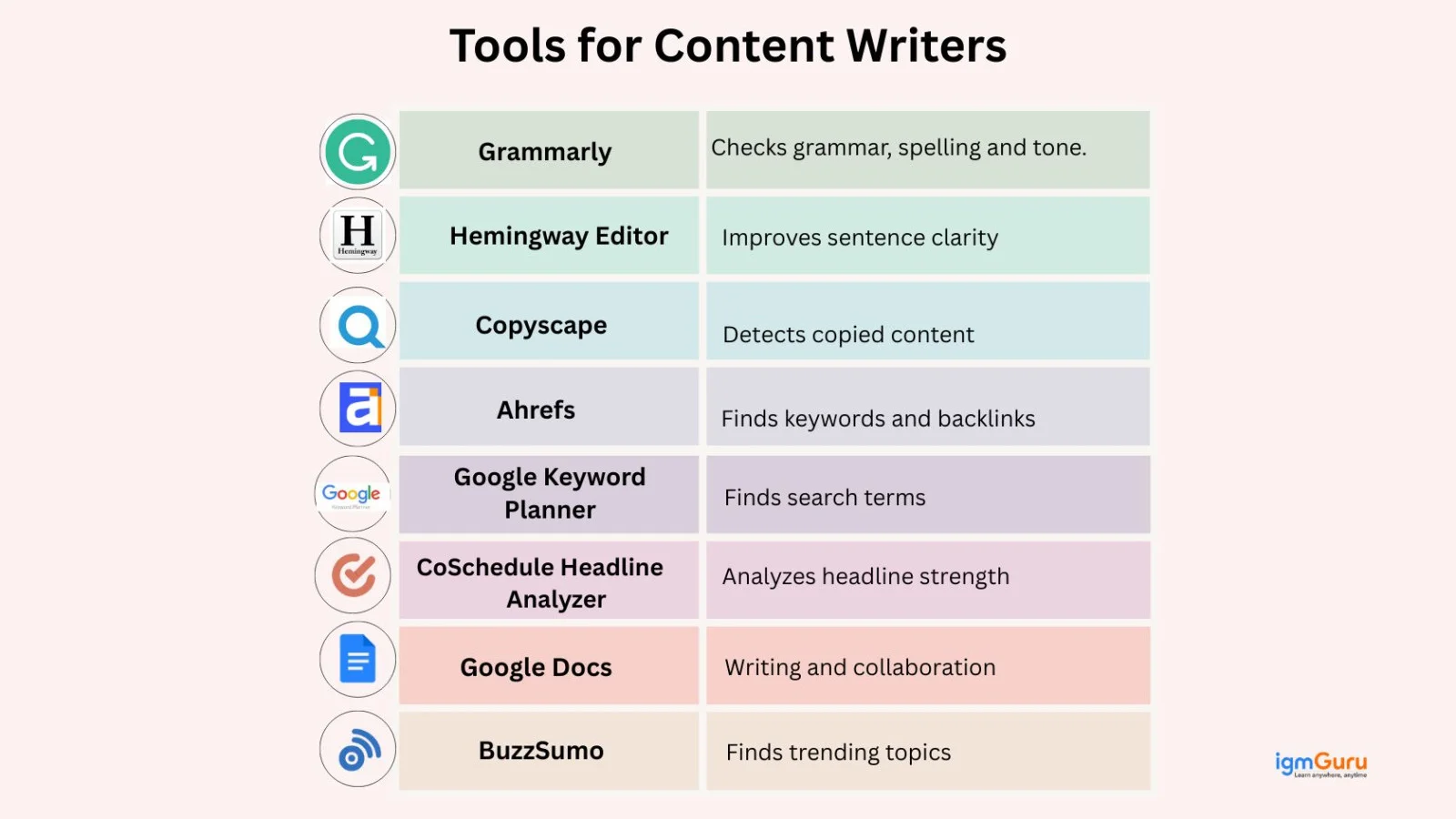
There are various tools for creative writers. Let me give you a brief look at that:
| Tool Type | Tool Name | Purpose |
| Grammar & Editing | Grammarly | Checks grammar, spelling and tone. |
| Readability | Hemingway Editor | Improves sentence clarity |
| Plagiarism Checker | Copyscape | Detects copied content |
| SEO Research | Ahrefs and SEMrush | Finds keywords and backlinks |
| Keyword Planner | Google Keyword Planner | Finds search terms |
| Headline Analyzer | CoSchedule Headline Analyzer | Analyzes headline strength |
| Writing Platform | Google Docs | Writing and collaboration |
| Content Ideas | BuzzSumo | Finds trending topics |
Here are some of the best tricks that will help you become an effective content writer.
When I was a beginner in my content writing profession, I made a lot of mistakes and now I want you to avoid them and learn from them. Here are some following common mistakes you should definitely avoid:
1. Not Understanding the Target Audience: If you don’t understand who you are writing for then your content will not connect with readers.
2. Poor Research: You cannot provide your readers with false information. For that always check for confirmation.
3. Ignoring SEO Basics: You should learn simple SEO like using the right keywords, writing clear headings and adding meta descriptions. Then only your content will rank.
4. Using Complicated Language: Try to make your language easy for readers to understand. You do not need fancy vocabulary to make your article look professional.
5. Skipping Editing and Proofreading: Never post without proofreading because who knows your content might have grammatical errors or double spacing.
6. Not Adding Real Examples: When you add a real example, you connect with your readers in depth. If you only explain theory without examples your content may feel boring.
Before you start the journey in this profession, you should know that this job comes with a few challenges that I also faced just like other content writers out there. Let me explain you about this:
1. When there is so much content available online, it becomes very difficult to get new and fresh ideas. Writers should always avoid plagiarism and add their own perspective.
2. They have to handle multiple projects at once and this is why managing time and submitting work on time can be stressful.
3. Content trends, SEO rules and audience preferences are always changing.
4. Different audiences need different tones and styles. For example when you are writing for students you have to keep tone simple and casual that is way different from writing for business owners.
Yes, this profession is absolutely saturated as there are thousands of writers and AI tools that make content writing easy. The general blog writing is definitely competitive, but that doesn’t mean there’s no room for you. There are a lot of businesses too that still need writers who truly understand their niche, their audience and how to create content that gives real results.
The only thing you have to do is to focus on building expertise, learning SEO and offering strategic value. This will help you build a strong and successful career. You will be really shocked when exploring their annual income. Let me give you an overview on their salary packages.
Content writing offers a wide range of career paths and earning potential, depending on your skills, experience and chosen niche. Here is what you need to know about building a successful career and what you can expect in terms of salary and future opportunities.
Content writers can start as entry-level writers and progress to more senior roles over time. Typical career paths include:
With experience, writers can also specialize in areas like technical writing, SEO content, or digital marketing, which often offer higher pay and faster advancement.
Salaries for content writers vary based on location, experience, and expertise. Here’s a general overview:
| Experience Level | India (Annual) | USA (Annual) |
|---|---|---|
| Entry-Level (0–2 yrs) | ₹2 – ₹3.5 Lakh | $35,000 – $55,000 |
| Early Career (1–3 yrs) | ₹3 – ₹4.5 Lakh | $55,000 – $67,500 |
| Mid-Level (3–5 yrs) | ₹3.5 – ₹6 Lakh | $65,000 – $85,000 |
| Senior-Level (5–9 yrs) | ₹6 – ₹10 Lakh | $80,000 – $110,000 |
| Lead / Director | ₹10 – ₹20 Lakh | $100,000 – $150,000 |
Salaries can also differ within countries. For example, writers in Bangalore and Mumbai tend to earn more than those in smaller cities, and US cities like San Francisco and New York offer higher average pay due to greater demand and higher living costs.
Key factors that impact your earning potential include:
Writers with advanced skills, a strong portfolio, or expertise in high-demand niches often command higher rates and faster promotions.
The demand for skilled content writers continues to grow worldwide. According to research and industry data:
With the rise of digital platforms and a focus on high-quality, engaging content, content writing remains a promising career for those who continuously upgrade their skills and adapt to industry trends.
Read Also: How to Become a Digital Marketing Specialist
Following are some research done by various platforms for the future of content writing profession:
In this guide, I have explained how to become a content writer step by step, from skills and niches to future scope. Content writing requires clarity, consistency and continuous learning. After reading this, start practicing and begin applying for opportunities with consistency.
No, AI can never replace human creativity and emotions. It can help with ideas and drafts.
The three C’s of writing are: Clear, Concise and Compelling
If you practice with consistency and have the will to improve your skill then you can easily become in 2-3 months.
Basic SEO is very important today. It helps your content rank and reach more people.
|
About Author |
|

|
Nehal Sharma is a passionate technical content writer with a strong interest in simplifying complex technical concepts into clear, engaging and easy-to-understand guides. She specializes in creating well-structured articles, blogs and documentation that bridge the gap between technology and its audience. Her Articles are created by deep research under the guidance of top experienced professionals. |
Explore Our Trending Articles-
Course Schedule
| Course Name | Batch Type | Details |
|---|---|---|
| Digital Marketing Training | Every Weekday | View Details |
| Digital Marketing Training | Every Weekend | View Details |