With the increasing use of social media by people, many consumers are no longer just using Google to find products. They are actively searching for products at Youtube and LinkedIn and judging them, using Facebook(Meta), Instagram and X. You may have also seen it in the form of reviews or PR. That's where SMO (Social Media Optimization) comes in.
It refers to the processes and methods used to manage and improve a business’s social media activities so that they can be seen, interacted with and have an overall greater online presence. In this article, I will explain to you what is SMO, its importance in brands and businesses, common mistakes to avoid and the latest trends for 2026.
Social Media Optimization is the process of using social media platforms in a smart and planned way to promote a brand, business or content online. It focuses on creating engaging posts, improving visibility, increasing followers and building strong relationships with the audience.
Businesses now directly connect with users on platforms like Facebook, Instagram, LinkedIn and X that are now turning simple content into powerful digital influence and helping brands grow faster in the online world.
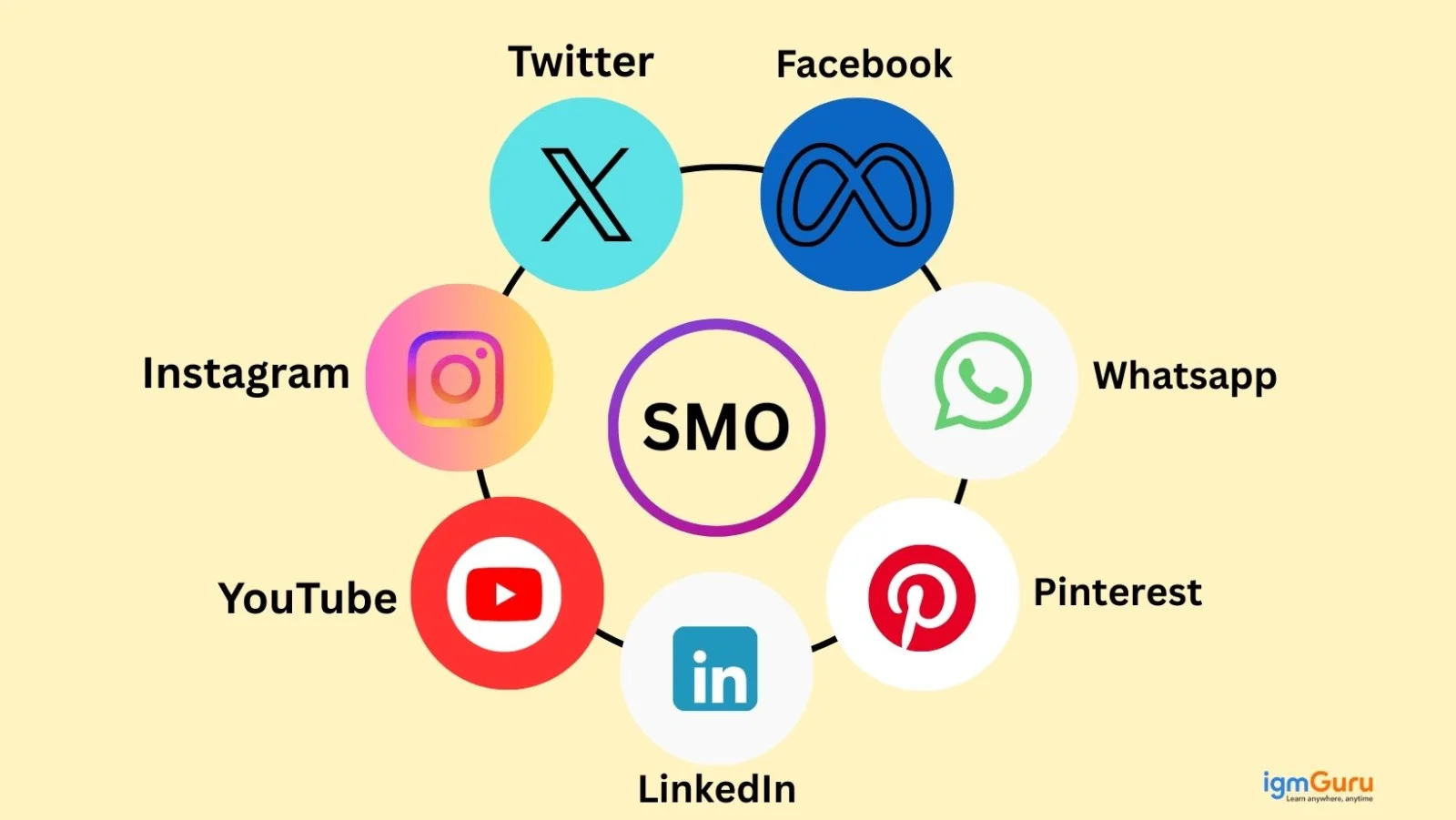
Social media optimization has become very important for businesses, as it is very helpful in increasing visibility, building trust, connecting with customers and growing a brand effectively through social media platforms. Following are some reasons why it is important:
With the help of social media, your business reaches a large number of people quickly. This means when you post content, it can be seen not just by your followers but also by their friends through likes, shares and comments.
When people see your brand name, logo or posts on social media, they start remembering you. Then your brand becomes familiar and people are more willing to choose you when they need your product or service.
When businesses share helpful posts, reply to comments and post reguarly, they feel more real. Customers trust brands that talk honestly, not just sell.
You can share links to your website, blog or products on social media. When people click those links, they visit your website. This means more visitors, which can lead to more sales or inquiries.
For small businesses it is best to go for social media marketing as they are cheap in cost and even if you want paid ads they cost very less as compared to TV ads or newspapers.
Social media lets customers like, comment, share, message, and react to your content. This interaction helps businesses understand what people like and keeps customers interested and involved with the brand.
Through comments, messages, polls and insights, businesses can learn about customer needs, problems, and preferences. This helps in improving products, services, and future marketing strategies.
Read Also: Benefits of Digital Marketing
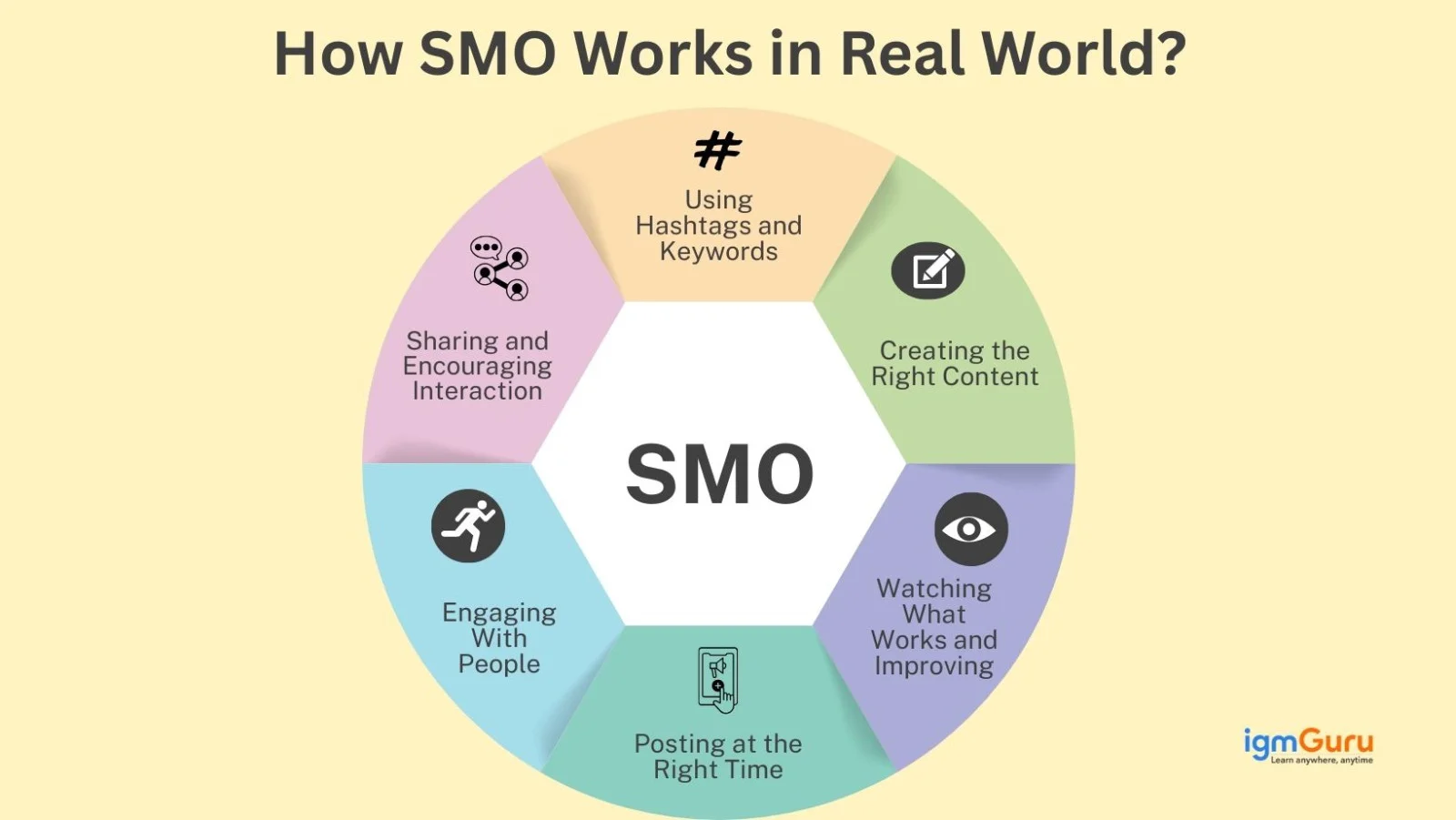
When focusing on posting good content, sharing at the right time, talking to people and learning from results. This helps more people notice, trust and connect with a brand or page. Let me brief you on how Smo works in real life:
Everything starts with what you post. People usually like content that are:
If your content is boring, then people will definitely scroll it.
Posting right or engaging content is not only the main thing, but you have to know at what time people usually stay online so that they can see what you have posted. For example:
Hashtags help social media platforms understand what your post is about. This means when someone clicks on that hashtag or searches for that particular thing, your content should be on top. It is a simple way to increase visibility without paying money.
If you are constantly posting, it will not help you effectively. You also have to engage people and it includes:
It will also work best when people start interacting with your post and share it on different platforms as well. You can encourage interaction by:
When you post something new, start learning from your results and do not feel and for that you have to check few things:
Let’s look at a real world example where I have worked as a social media manager at a small cafe to increase their visibility and revenue. I have boosted their monthly income by almost 200% in one month using my SMO skills. Here is how I did that:
The café owner wanted more people to visit, so she hired me to handle their social media accounts. Then I started to post aesthetic photos of coffee, snacks and happy customers on a regular basis. Sometimes there are short videos showing coffee being made or the café in the morning.
All this content is posted during the evening time with simple captions and familiar hashtags. People like, comment, and share the posts and the owner replies kindly. Slowly, more people notice the café online and begin visiting it.
Also Read: Digital Marketing Interview Questions and Answers
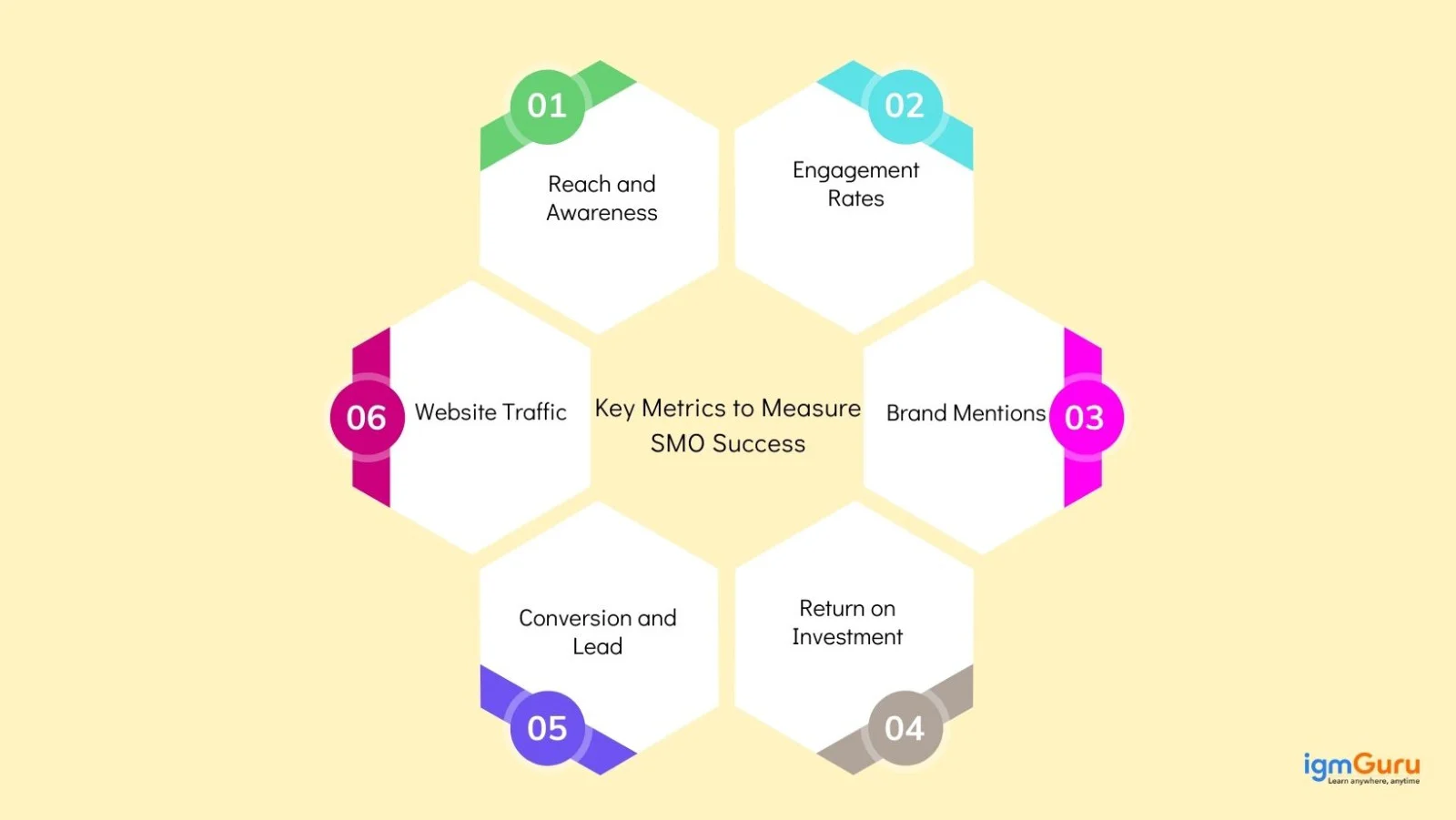
Measuring SMO success helps understand what is really working on social media. Following are some of the main key metrics that help track performance and improve social media strategies:
How many people have seen your post and become familiar with your brand? You should be tracking your Reach and Awareness in order to report these figures to management. Once your content grows beyond Visibility, you will have a compiled consistent Social Presence.
You should track your Engagement Rates such as likes, comments, shares or saves in order to determine how your target audience interacts with your content. If they responded positively or negatively, it is a good indicator of whether or not the content is relevant to that audience.
It is also essential to measure your Website Traffic. This allows you insight into the number of users who visited your website as a result of clicking on your link in social media posts. If the content you post on social media attracts users enough that they have taken the initiative to go out and seek additional information, there will be a direct increase in Website Traffic.
Tracking your Conversion and Lead data helps to measure the number of people taking action as a result of your social media efforts. Examples of actions include signing up, contacting or purchasing through social media. These conversions and leads will help you assess whether or not social media attention translates into business results.
Return on Investment is important when determining the monetary value or value of time invested in SMO versus what you received as a return from your investment. If your ROI from your investment was positive, this indicates that your social media activities are of value.
Brand Mentions is the total number of times your brand was mentioned on the internet by users. The increased number of Brand Mentions equates to a higher degree of trust within the community and brand recognition.
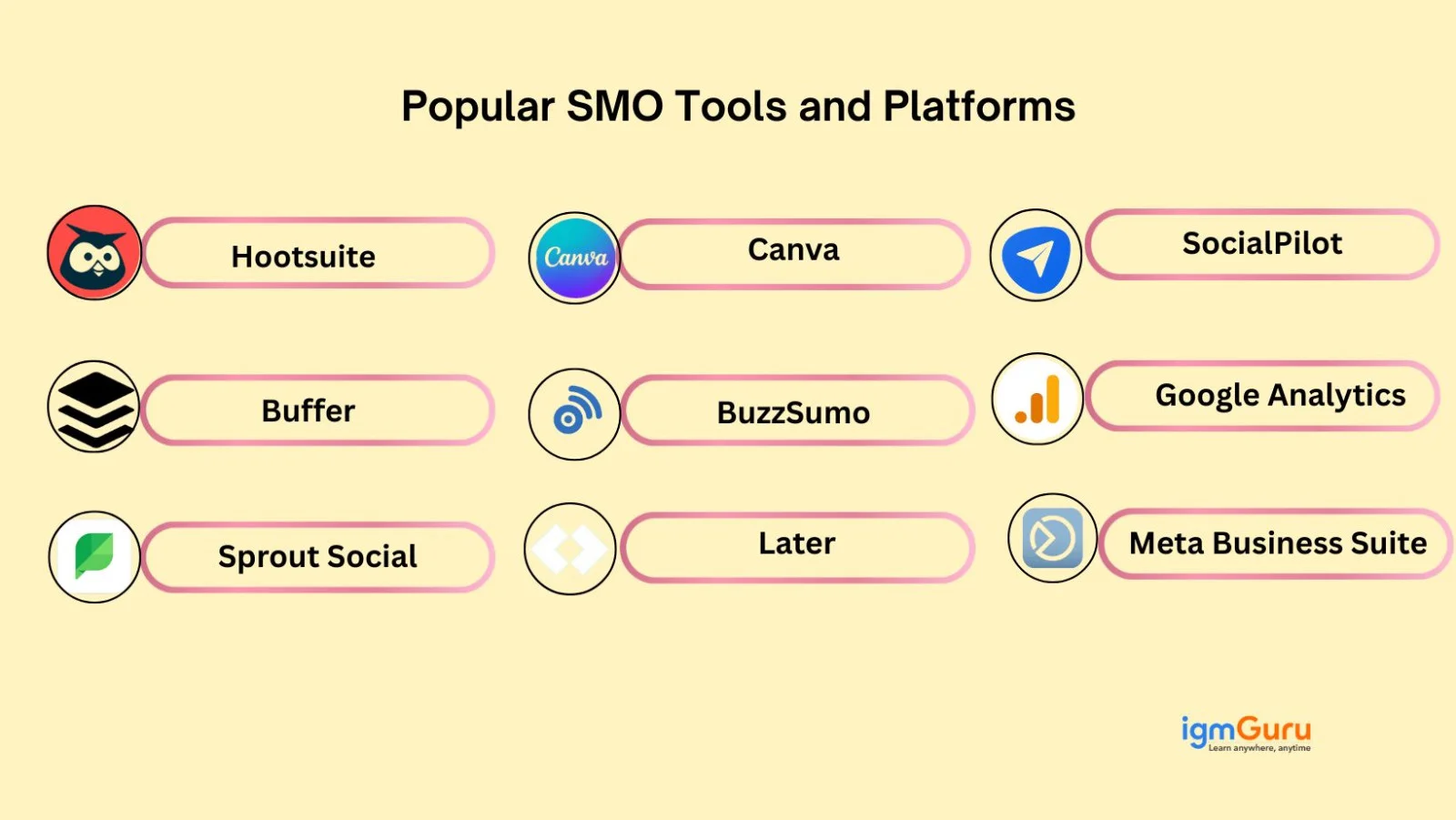
There are various tools that content creators, influencers or businesses use to manage and track their social media platforms. Following are some of the most commonly used tools for the same:
| Tools | Main Purpose | Description |
| Hootsuite | Social media management | It is used for managing multiple social accounts from one dashboard. |
| Buffer | Content scheduling | It is best for small teams and beginners. |
| Sprout Social | Analytics & engagement | It is best for brands that focus on data driven decision. |
| Canva | Visual content creation | It is used for creating attractive posts without design skills. |
| BuzzSumo | Content research | It is used for finding viral content ideas. |
| Later | Visual scheduling | It is an instagram focused brand. |
| SocialPilot | Automation & scheduling | Agencies and freelancers use it. |
| Google Analytics | Traffic & conversion tracking | It is used for understanding ROI from social media. |
| Meta Business Suite | Platform-specific management | It is used for businesses that are focused on Meta platforms |
When working to build your social media presence, it is really important for you to understand some common SMO mistakes. This is going to help you connect with audiences better and get good results from the time and effort you put online.
1. Posting without a plan: There are so many users who will post regularly, whenever they remember. So to avoid this, you should always have a simple posting plan and share content regularly, even a few times a week. This helps the users to maintain consistency and keep their audience interested.
2. Using poor quality photos or videos: Blurred, dark or messy images make the page look unprofessional. You should always try to get clear and bright photos for more attention.
3. Posting too much or too little: When you post too much it will genuinely annoy your audience or even if you post less, they will either forget about your account or they might unfollow you. Try to keep balance when you are posting.
4. Using too many hashtags: Using too many hashtags will make you look spammy. For that try using only relevant hashtags.
5. Only promoting, not engaging: Start engaging with your audience so they don’t get bored with your content. When your content has promotions with useful, fun or behind the scenes, it will definitely boost your account.
6. Copying and pasting content from others: Copy and paste from others can make your account look less authentic and you might lose trust. Originality is the best thing you can do.
Social media is now evolving more in 2026. People are now spending their time watching short videos, interacting in comments and seeing content suggested by AI. Take a look at the following trends with proof for your better understanding:
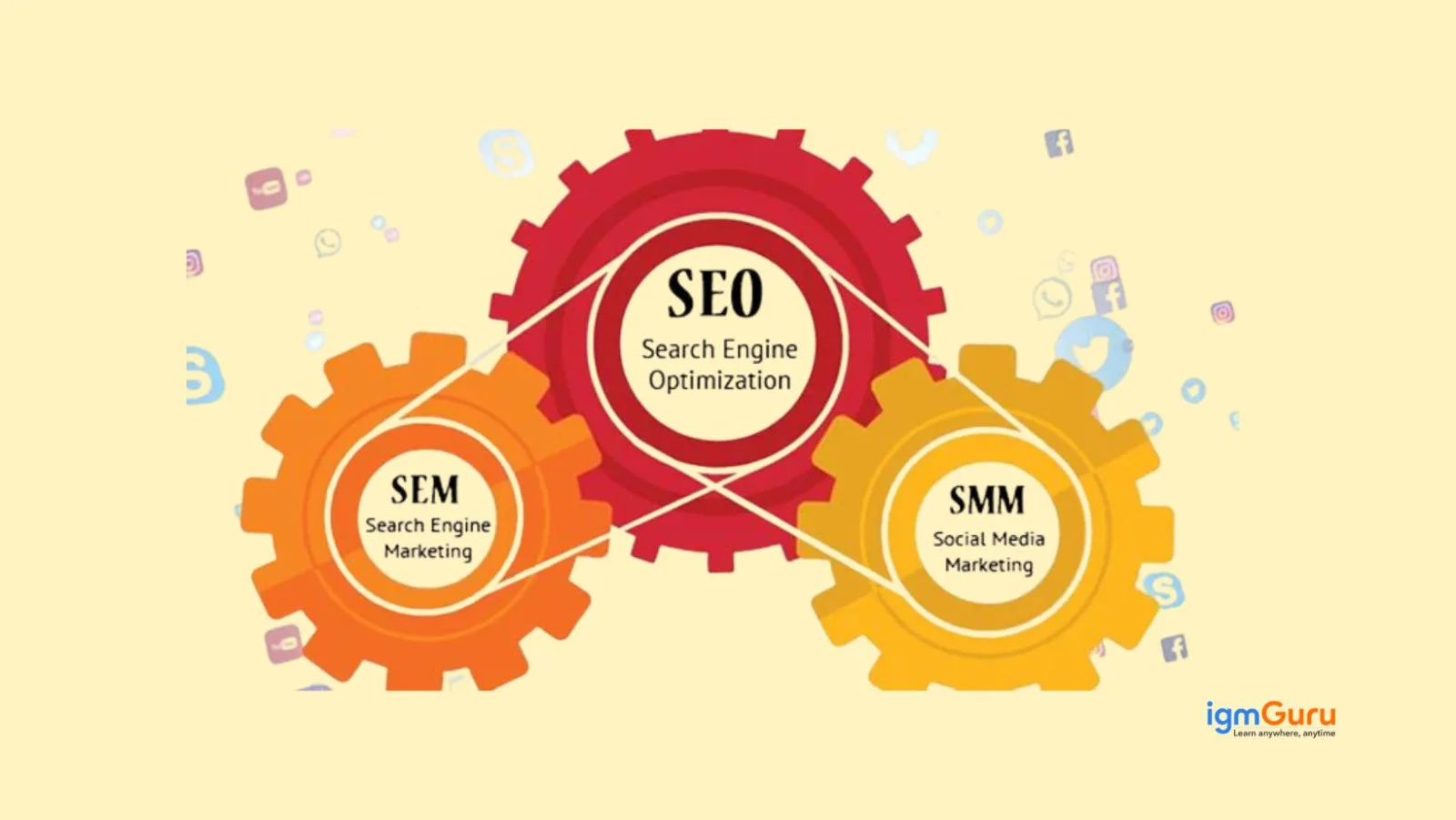
Businesses use different online methods to help more people find them. SMO, SEO, and SMM are three simple ways to do this. As these help businesses become more visible online, but each one works in its own way. Here is a comparison for each to get better look at it:
| Parameters | SMO | SEO | SMM |
| Main focus | Its main focus is to improve social media pages. | It improves websites for search engines. | Promotion through social media ads and campaigns. |
| Where it works | Instagram, X, Facebook etc. | Google, Bing, and other search engines. | Instagram, Facebook, YouTube etc. |
| Main goal | To get more likes, shares and followers. | To rank high on Google search. | Get quick reach, leads or sales. |
| Type of activity | Posting regularly and engaging with people. | Using keywords, good content, and website fixes. | Running paid ads and promotions. |
| Cost | Mostly free | Mostly free | Paid |
| Speed of results | Medium | Slow but long-lasting | Fast |
Social Media Optimization in modern days has evolved far beyond general strategy like posting regularly and using hashtags. It has now become more data-driven, AI-supported and community-focused. The reason is simple: the platforms are smarter, algorithms are more personalized and users expect faster responses and more authentic content.
Therefore, brands are not just optimizing posts, they are optimizing conversations, short videos, creator partnership, and even comments. Let’s look at what is truly new in SMO and how businesses are adapting.
Artificial Intelligence is now deeply integrated into social media platforms. Their algorithms can study user behavior, watch time, interests and interaction patterns to decide which content appears on feeds. No worries. You also have the option to use AI tools to stay relevant. They can help you in:
AI can help you post smarter and personalized content delivery. This way you meet the biggest changes in SMO.
Search engines were traditionally limited to finding information. But not anymore. Users are using platforms like Instagram, YouTube, and LinkedIn as search engines. They are search their for:
This is also what the influencers do. Because of this shift, keyword optimization inside captions, profiles and video descriptions has become very important. Social media SEO is now a major part of SMO strategy.
The audience always likes short form contents that can give them a comprehensive overview. What better option do we have apart from the short-form videos? You can promote reels, shorts and quick clips more than static posts. These videos get higher reach and better engagement compared to images or long text posts. You can create:
If a brand ignores short-form video, it misses a large portion of organic visibility.
Follower count has also become an outdated trend now. This count does not reflect the engagement quality. This is where you need to build a community that is really interested in what you offer. Social media platforms also only promote content that builds real conversations.
Strong communities increase loyalty, repeat engagement and organic growth.
Micro-influencer collaboration is not just a strategy but a digital marketing trend in 2026. Instead of working only with big influencers, brands are now partnering with micro and nano influencers. These creators have smaller but highly engaged audiences. Why this is new and important:
SMO strategies now include influencer optimization along with content optimization.
This article describes social media optimization and explains why SMO is still relevant now more than ever. It includes explanations of SMO, its importance, examples of successful use within social media platforms today, the tools needed for SMO, common mistakes made in SMO and social media optimization trends for 2026.
After reading this, you should review your social media pages, make a simple posting plan, focus on good content and engagement, track results regularly, and slowly improve strategy to build a strong and trusted online presence.
You can use it for platforms like Facebook, Instagram, X, LinkedIn, YouTube and Pinterest.
It includes content posting, hashtag use, engagement, profile optimization and analytics tracking.
The skills you need in SMO is that you should have is content writing, creativity, basic design, communication and data analysis skills.
Explore Our Trending Articles-
| Course Name | Batch Type | Details |
| Social Media Marketing Training | Every Weekday | View Details |
| Social Media Marketing Training | Every Weekend | View Details |